
"agricultural policy"
500 article(s) found
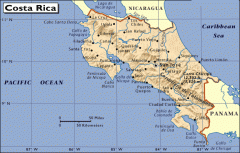
Home-baked boutique coffee (8) Costa Rica
What word is used to describe Costa Rica? Pure. Soft. Equilibrium. This Central American bean has a pure taste that no beans can have, too pure to have any miscellaneous flavor, and this purity translates more into a soft and balanced taste, including its rich fruity aromas. are fresh and lively notes with the natural sweet and sour fruit. In the middle

Burundian Coffee characteristics Burundian Coffee Flavor, introduction of Burundian producing areas
For information, please follow the coffee workshop (Wechat official account cafe_style) Burundian Coffee in 1920 the Belgian colonists brought coffee to Burundi to grow. As a result of the policy imposed by the Belgian colonists, by 1933, each farmer was required to plant at least 50 coffee trees. Burundi achieved independence in 1962 and coffee production was gradually privatized. Due to the overall political climate

Costa Rica's earliest coffee growing area-Central Valley
Professional coffee knowledge exchange More coffee bean information Please pay attention to coffee workshop (Weixin Official Accounts cafe_style)[Front Street Barista Notes] Costa Rica's earliest coffee planting area Central Valley Original: Front Street Coffee Front Street Coffee ▲ Click to pay attention| Focus on Coffee Roasting 6th Anniversary More Fine Coffee Beans Please Add Private WeChat Front Street, WeChat Signal: (Long Press Copy) qiannj

Costa Rican Yersalo Coffee with Light Flavor and Pure Taste
Costa Rica is exposed to natural disasters several times higher than other regions, but its arable area is more than enough to compensate. There are many kinds of coffee here, but its industrial policy is large and cheap, so there are not many excellent coffee, but it is a good choice to mix other coffees. One of the most famous is Mountain Costa Coffee, which tastes mellow and neutral.

Dehong Which brand of coffee is good to drink_Dehong coffee quality how_Dehong coffee price list
Professional coffee knowledge exchange More coffee bean information Please pay attention to coffee workshop (Weixin Official Accounts cafe_style) Dehong is a beautiful place, known as the hometown of peacocks, the mythical hometown of song and dance at home and abroad, and won the laudatory title of Chinese coffee hometown in 2013. Its coffee industry has become the leading factor in promoting the coordinated development of urban and rural areas in the construction of Dehong Ruili National Key Development and Open Experimental Zone

Introduction to the cultivation of Angolan coffee beans _ price of Angolan coffee _ is Angolan coffee good?
Professional coffee knowledge exchange more coffee bean information please follow the coffee workshop (Wechat official account cafe_style) Angola has grown coffee for more than 100 years, is the fourth largest coffee industry in the world, and its output ranked first in Africa until 1960. In the mid-1970s, 98% of Angola's annual coffee exports are Robbins, making it the best quality coffee in Africa.

Kenyan Coffee Bean Variety and Flavor characteristics of Dedan Kimathi University Coffee Bean
The background and flavor of Kenyan coffee beans in the 19th century, Kenya was still under the control of the British colonial government, and the colonial rulers brought oppression and exploitation, under many unequal treatment, the Kenyan people, who did not have the concept of state organization at that time, from the original scattered state gradually developed the idea of modern consciousness and nation-state. So, between 1956 and 1960, the military took place.
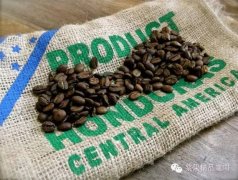
The size of coffee producing areas reduced due to the new government in Honduras
According to a recent report released by Reuters Africa, leaders of the Honduran Ministry of Agriculture plan to convert 8% of the country's coffee farms to cocoa. The news came from the country's Ministry of Economic Development and the National Coffee Association ihcafe told Reuters, the country's Minister of Economic Development Alden Rivera pointed out that because many coffee farms are affected by a particularly serious leaf rust disaster, if not

Introduction to boutique coffee from Dominica with winding aftertaste and smooth taste.
Thousands of Tylenos were demoted to slavery and engaged in gold mining. Due to a series of oppression, hunger and disease, by 1535, the Tino had only 60,000 left. In 1501, King Ferdinand I and Isabella of Spain were the first to allow Caribbean colonists to introduce slaves from Africa. They began to arrive on the island in 1503. [3] in the early days of the Spanish island, the Spaniards were in the new.

Introduction to self-baked boutique coffee: Costa Rica
Edwin Mora and Mario Jimenez teamed up to run the small farm three years ago and has its own raw bean factory. The farms and workshops are in the small town of La Angostura de Len Corts in the Tarasu area. Although the scale is very small, they have been trying to maintain high quality. Here coffee is taken good care of from breeding to harvest, and they also make use of many new ones.

Costa Rican Coffee Flavor introduces the Goddess Manor Costa Rican Coffee producing area
Costa Rica faces several times more natural disasters than other regions, but it has enough acreage to make up for it. There are many kinds of coffee here, but its industrial policy is large and cheap, so there is not much premium coffee, but it is a good choice for mixing other coffees. One of the most famous is Mountain Costa Rica Coffee, which tastes mellow and neutral.

Rwanda IGIHANGO Women's Women's League Coffee Bean Story _ Rwanda Micro batch Coffee Bean
Professional coffee knowledge exchange more coffee bean information please follow the coffee workshop (Wechat official account cafe_style) Rwanda is located in the heart of the interior of Africa, its mountain terrain is fertile land, as well as ancient traditional bourbon species, indicating that the natural environment needed to grow quality coffee beans can be found everywhere in Rwanda. Coffee was introduced to Rwanda by German missionaries in 1904, 1930.

Angola, once a big coffee producer, now has an uncertain future. Is it good?
Professional baristas Please follow the Coffee Workshop (Wechat cafe_style) in the mid-1970s, Angola (Angola) exported 3.5 million bags of coffee a year, 98% of which was Roberts (which may be the best Roberts in Africa), but total production dropped to 200000 bags in 1990. The best brand in Angola used to be Ambrish.

The price of Yunnan Pu'er coffee shows a fluctuating downward trend in 2018. High-quality coffee beans are more "anti-falling".
Professional coffee knowledge exchange more coffee bean information please follow the coffee workshop (Wechat official account cafe_style) since the base period (November 3, 2017), the Xinhua Yunnan (Pu'er) coffee composite price index showed a downward trend. On October 12, 2018, the index was at 812.69 points, down 3.59 points from the previous period and 187.31 points, or 18.73%, from the base period (1000 points).

Sustainable Development Strategy of Ramla and Hartman, Gerisha Manor in Panama
Professional baristas follow the Coffee Workshop (Wechat official account cafe_style) although La Mula does not have any official certification, from an environmental and social point of view, the farm is designed as a model of sustainable development. The agricultural philosophy originally designed finally became the guiding ideology of agricultural development and agricultural management. Despite the potential benefits of being certified as a farm, Finc

Brief introduction of planting Market Price of Fine Coffee Bean varieties in St. Roman Manor with ideal acidity
The research center, located about 30 kilometers northeast of the Costa Rican capital San Jose, belongs to the Costa Rican Coffee Association and is a research institution for villa sarchi planting, breeding and quality inspection newly developed by Costa Rica's national coffee breeds. in addition, it also has 10 hectares of experimental plots, planting a number of excellent varieties. Coffee is the main agricultural product in Costa Rica, with an annual output of more than 2 million bags

Light and pure flavor and pleasant aroma characteristics of Costa Rican Saint Roman Manor Coffee
Costa Rica accounts for only 0.03% of the world's land area, but with nearly 4% of the world's species, Costa Rica is one of the countries with the richest biological species in the world. 26% of the land area is a national park or nature reserve, including 11 wetlands, 2 biological reserves and 3 World Natural Heritage sites. The national forest coverage rate is 52%. Natural resources include iron, manganese, mercury, bauxite,

Brazilian spring manor beans taste fragrant Brazilian coffee types and prices
Exchange of professional baristas Please pay attention to the flavor of coffee workshop (Wechat official account cafe_style): oranges, nuts, Xuanmi tea, peanuts there are many kinds of coffee, but its industrial policy is large and cheap, so there is not much premium coffee, but it is a good choice for mixing other coffees. The taste of Brazilian coffee has a low sour taste, which matches the sweet and bitter taste of coffee.
A brief introduction to the Origin, Development, History and Culture of Fine Coffee beans in St. Roman Manor
The research center, located about 30 kilometers northeast of the Costa Rican capital San Jose, belongs to the Costa Rican Coffee Association and is a research institution for villa sarchi planting, breeding and quality inspection newly developed by Costa Rica's national coffee breeds. in addition, it also has 10 hectares of experimental plots, planting a number of excellent varieties. Coffee is the main agricultural product in Costa Rica, with an annual output of more than 2 million bags

The quietly growing coffee industry in Southeast Asia Yunnan small-grain coffee is the favorite of big international brands.
Professional coffee knowledge exchange more coffee bean information Please pay attention to the coffee workshop (Wechat official account cafe_style) We have always thought that the world coffee producing area should be mainly in Central and South America. Asians are slow to ripen coffee, and the main consumption is tea culture. Once upon a time Vietnam was the second largest producer in the world, while Yunnan, China, was also eager to catch up, and its quality